Engineering Analysis: 150W Halogen to LED Conversion
Replacing a 150-watt Halogen lamp with a modern LED cuts power draw to 20–25W while maintaining 2,400 lumens of usable light output (106.7 lm/W efficacy).
1. Photometrics & Electrical Load Profile
Quartz-halogen lamps enclose a tungsten filament in pressurized halogen gas for whiter light and slightly higher efficacy than standard incandescents, while operating at intense capsule temperatures.
At 3 hours per day, a 150W lamp uses 164.3 kWh per year, whereas a 20–25W LED uses just 24.6 kWh per year — saving 140 kWh/year ($25.13/yr at $0.18/kWh) and avoiding roughly 119 lbs of CO2 per socket annually.
2. Typical Applications & Socket Envelope
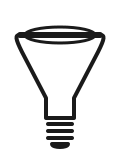
In homes and light commercial spaces, 150W Halogen lamps are commonly used in outdoor twin-head security floods, driveway spotlights, and high-ceiling retail or atrium cans. Typical physical form factor: PAR38 E26 outdoor flood bulb or double-ended J-type (R7s) work/flood fixture.
Confirm whether your 150W halogen is a screw-in PAR38 flood bulb or a thin double-ended quartz tube (R7s). Screw-in PAR38 sockets take a 20–25W PAR38 LED directly; R7s quartz flood housings are usually better replaced as a complete integrated LED floodlight.
150W halogen exterior floods run scorching hot and draw insects toward doorways.
3. Multi-Socket Household Savings
One 150W swap saves $25.13 per year, and most homes run several matching sockets:
- 10-Year Single-Socket Savings: Over 10 years at 3 hrs/day, one LED swap saves $251.30 in electricity at $0.18/kWh.
- 10-Bulb Room or Whole-Home Upgrade: Replacing ten 150W lamps cuts annual electricity bills by $251.30/year.
- Lower Air-Conditioning Heat Load: Every watt removed from indoor lighting reduces waste heat that your cooling system would otherwise remove in summer.
4. Color Temperature (Kelvin) & Color Rendering (CRI)
Match color temperature (CCT) to the room:
- 2700K (Warm / Soft White): Matches the golden warmth of traditional incandescent filaments. Best for bedrooms, living rooms, dining rooms, and table lamps.
- 3000K (Bright Warm White): Slightly crisper white light suited to kitchens, bathrooms, recessed cans, and hallways.
- 4000K–5000K (Neutral / Daylight): High-contrast task light for garages, workshops, laundry rooms, and utility areas.
- CRI 90+: Recommended wherever skin tones, food, wood finishes, or artwork matter.
5. Installation & Compatibility Checklist
- Confirm Base Sizing: Standard North American household sockets use an E26 medium screw base, while chandeliers and small sconces typically use an E12 candelabra base.
- Verify Dimmer Compatibility: If the fixture is on a wall dimmer, choose bulbs explicitly labeled "Dimmable" and pair them with an LED-rated dimmer (such as Lutron Diva LED+, Caseta, or Leviton Decora SureSlide) to prevent buzz or low-end flicker.
- Check Enclosed Fixture Ratings: Inside sealed ceiling globes, vanity jars, or outdoor lanterns, use bulbs labeled Enclosed Fixture Rated so trapped heat does not shorten driver life.